

19.11.2026, 18:05
Attacks on the Crimean Bridge, compromises on Ukraine and the "new Yalta". Putin delivered a speech after a historic summit with Trump and Xi
Source: OREANDA-NEWS
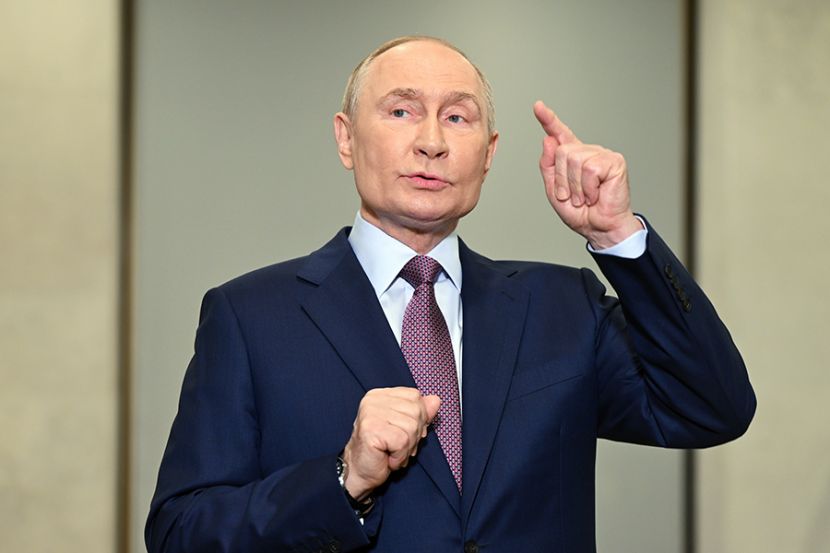
OREANDA-NEWS Russian President Vladimir Putin summed up the meeting with his American and Chinese counterparts Donald Trump and Xi Jinping on the sidelines of the Asia-Pacific Economic Cooperation (APEC) summit in Shenzhen, China November 19.
Thus, the participants adopted a declaration of peace. The parties intend to contribute to the reform of the United Nations so that the organization "can respond more effectively to global challenges and meet its fundamental mission in the field of international peace and security." Issues of security and non-proliferation of nuclear weapons were also discussed.
Putin called the talks very useful and the format successful. "I would really like this to continue, at least in the sense that in terms of reconciliation of hours, in a number of key areas, in my opinion, if not an agreement, then there was mutual understanding," he said.
It is not so easy to come to a common denominator here, especially to carry out the existing agreements to the end, but the very attitude of our interlocutors and partners sets us up in a positive way. It is better if there are some agreements, even if they are not fully implemented, than if there are none at all.
For the first time, the Russian leader commented on the new attacks by the Armed Forces of Ukraine (AFU) on the Crimean Bridge — it has been attacked three times in the last three days.
The politician recalled that the construction consists of two bridges — automobile and railway. He called the serious damage caused by the Ukrainian Armed Forces to the part used for motor transport. The railway has already been restored, he said. Putin promised that the Crimean Bridge will be fully restored.
He stressed that this is an exclusively peaceful facility that has not been used for the transportation of military equipment for a long time. The Russian president announced Moscow's response to the attacks.
We will respond to these blows. And I want everyone to know about it. I believe that our retaliatory actions, as I said just now, will be much more painful than what the Kiev regime has done regarding the bridge.
He said that prior to the Ukrainian Armed Forces attacks on the Crimean Bridge, he discussed with the country's Security Council a possible cease-fire in some areas. "I discussed this issue with my colleagues from the Security Council and asked everyone to think about it and return to this issue in the hope that something might be agreed upon, but after the attacks on the Crimean Bridge, we will not negotiate," the speaker said.
As the Russian leader noted, the United States offered compromises on Ukraine, Russia agreed to them as a result of negotiations in Anchorage, but the question remained whether Kiev and Europe would want to agree with them. "Do they want to reach agreements by peaceful means to end hostilities, to end the war? Judging by what we see, not at the moment," the president stressed.
According to him, future compromises with Ukraine are possible if the country's authorities and its sponsors realize the current realities that have developed in the field of cessation of hostilities. According to the politician, Moscow recognizes that Ukraine has the right to security, just like Russia.
It's about security for both Russia and Ukraine. We recognize that Ukraine has a right to security, just like Russia. It's just that no one wants to discuss Russia's security. And this is a significant moment for us, to put it mildly.
The Head of State also recalled how in 1991 Moscow was promised that NATO would not expand to the east. In addition, he stressed that Russia did not start the conflict in Ukraine, but is trying to end it. The speaker added that the Ukrainian authorities do not want peace because they are afraid of losing the elections after the end of hostilities.
The Russian President answered a question about whether the meeting with Trump and Xi on the sidelines of the APEC summit is similar to the Yalta conference.
"Vladimir Vladimirovich, does it look like Yalta 2.0?" one of the journalists asked. The politician nodded affirmatively in response.
He said that there was nothing wrong with the Yalta Conference, because it recorded the victory over Nazism, and now it is necessary to record the victory over neo-Nazism.
As for the "new Yalta" (...) Firstly, the victory over Nazism was recorded in Yalta. I would not mind, I think it would be right to record the victory over neo-Nazism, so that we could talk about eradicating the very ideological roots of xenophobia, Russophobia and other phobias. So that we can talk about the eradication of everything related to collaboration during World War II and collaboration with Hitler and his regime. What's wrong with that?
He clarified that no one shared the peace in Yalta — the conference only recorded the realities of the Second World War, and "in today's conflicts we will have to accept the realities."
The politician also recalled that former President of Ukraine Viktor Yanukovych opposed the country's accession to NATO, but he was "demolished" with the help of a coup.




Комментарии