


01.09.2026, 23:07
Russia-ASEAN trade has significant growth potential
Source: OREANDA-NEWS
OREANDA-NEWS Russia's trade with the ASEAN countries has a huge growth potential, said a representative of the Russian Export Center (REC, VEB Group.Russian Federation) in Vladivostok Denis Drobot.
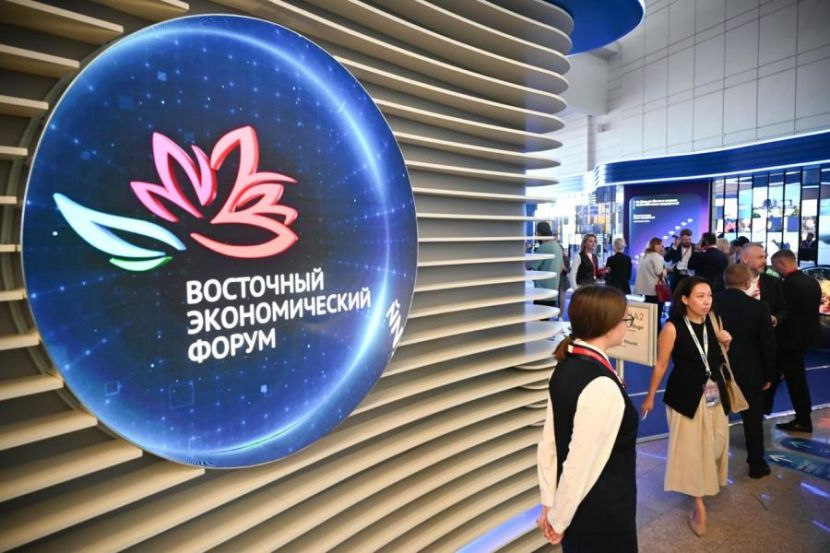
"Russia's trade with the ASEAN countries, which currently accounts for about 0.5% of the region's total trade turnover, has significant growth potential that is not commensurate with the scale of the Russian economy and its real capabilities. This was stated by Denis Drobot, a representative of the Russian Export Center in Vladivostok, during the session "The Potential of SMEs in cooperation with Asian countries" on the sidelines of the Eastern Economic Forum," the REC's press service said.
"More than half of the Russian food producers included in the CIFER system of the General Customs Administration of the People's Republic of China were registered in 2021-2023. This demonstrates the systematic work of Russian companies and the export support infrastructure of the western part of our country to enter the market of the second economy in the world," Drobot said, referring to the analysis of public data and the results of the activities of regional data export support centers for 2021-2023.
According to his observations, companies in the south of Russia and the North Caucasus Federal District were most actively increasing their efforts in this direction: about half of them started working with China during this period, when some of the traditional sales markets were closed.
At the same time, the representative of the REC emphasized, Asian markets, including Chinese, remain highly competitive and saturated with imported products - if in 2014-2016 China was perceived by Russian exporters as a relatively comfortable destination against the background of a favorable ruble exchange rate and increased demand for food, today the situation is fundamentally different. "The post–Covid period is a completely different reality, which requires us to promote Russian products and increase their recognition," Drobot stressed.
As an example of effective promotion of Russian goods, the speaker cited last year's stream sales on Red Square: in six hours of broadcast, products worth about a billion rubles were sold, while some of the goods were sold out in 7-10 seconds after the start of sales. The key condition for such a result is the physical presence of products on the Chinese market, which implies a deep degree of immersion of the exporter in the market.
Drobot also noted that the size of the company's revenue or staffing is not an obstacle to entering the markets of China and Asian countries. According to him, systematic work with small businesses, in particular in the fields of beauty and health, organic fertilizers, and food production, is yielding results, although it often takes longer to conclude the first export contracts.
"Russia's trade with the ASEAN countries, which currently accounts for about 0.5% of the region's total trade turnover, has significant growth potential that is not commensurate with the scale of the Russian economy and its real capabilities. This was stated by Denis Drobot, a representative of the Russian Export Center in Vladivostok, during the session "The Potential of SMEs in cooperation with Asian countries" on the sidelines of the Eastern Economic Forum," the REC's press service said.
"More than half of the Russian food producers included in the CIFER system of the General Customs Administration of the People's Republic of China were registered in 2021-2023. This demonstrates the systematic work of Russian companies and the export support infrastructure of the western part of our country to enter the market of the second economy in the world," Drobot said, referring to the analysis of public data and the results of the activities of regional data export support centers for 2021-2023.
According to his observations, companies in the south of Russia and the North Caucasus Federal District were most actively increasing their efforts in this direction: about half of them started working with China during this period, when some of the traditional sales markets were closed.
At the same time, the representative of the REC emphasized, Asian markets, including Chinese, remain highly competitive and saturated with imported products - if in 2014-2016 China was perceived by Russian exporters as a relatively comfortable destination against the background of a favorable ruble exchange rate and increased demand for food, today the situation is fundamentally different. "The post–Covid period is a completely different reality, which requires us to promote Russian products and increase their recognition," Drobot stressed.
As an example of effective promotion of Russian goods, the speaker cited last year's stream sales on Red Square: in six hours of broadcast, products worth about a billion rubles were sold, while some of the goods were sold out in 7-10 seconds after the start of sales. The key condition for such a result is the physical presence of products on the Chinese market, which implies a deep degree of immersion of the exporter in the market.
Drobot also noted that the size of the company's revenue or staffing is not an obstacle to entering the markets of China and Asian countries. According to him, systematic work with small businesses, in particular in the fields of beauty and health, organic fertilizers, and food production, is yielding results, although it often takes longer to conclude the first export contracts.




Комментарии